
Quick answer
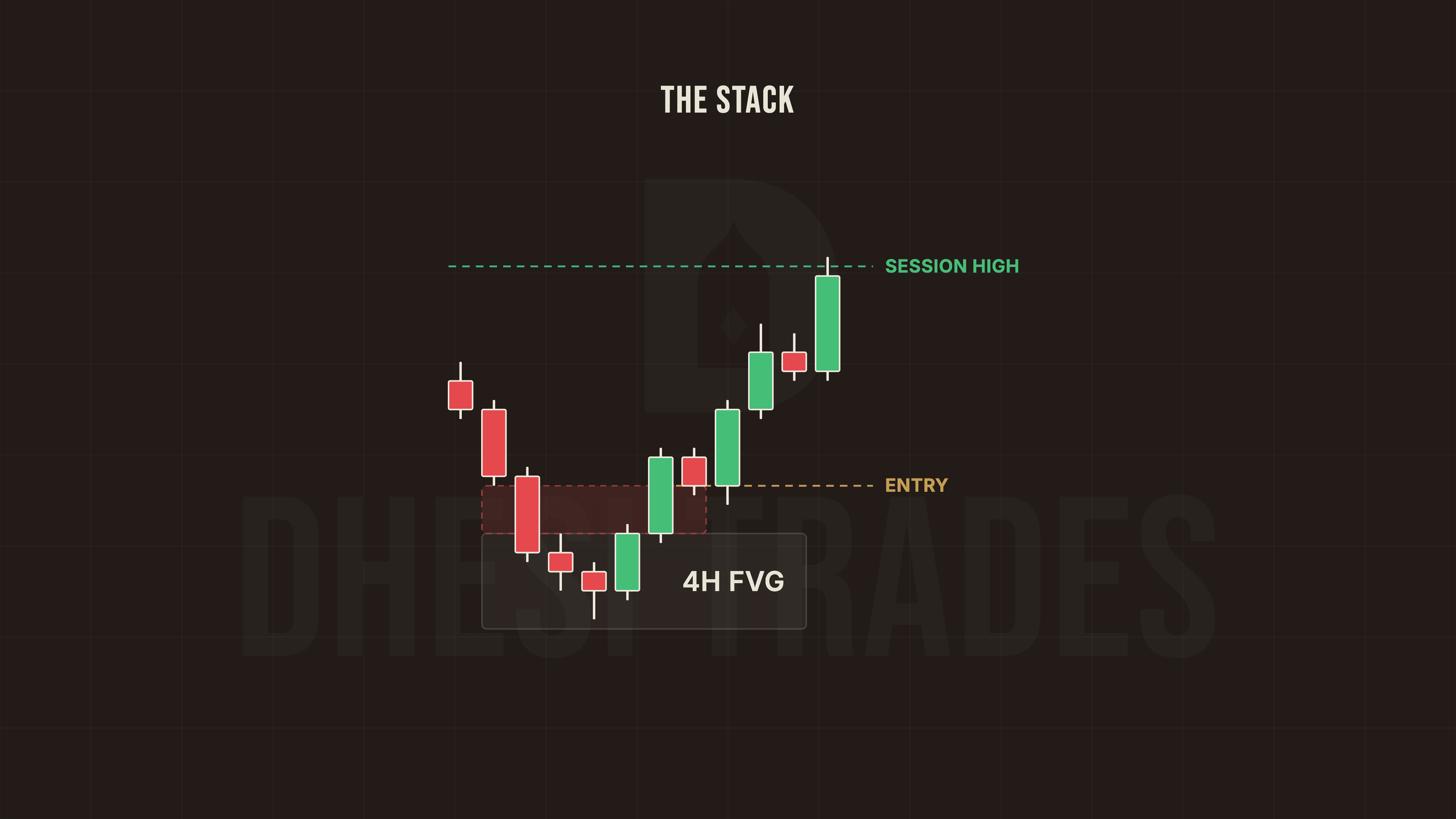
You don't need ten setups. You need one. Mine is the 4-hour bullish FVG as the higher-timeframe gravity, a 1-hour bearish FVG flipping inverse as the structural shift, and 1-minute SMT plus inversion as the entry trigger.
Introduction
You don't need ten setups. You need one, and the discipline to wait for it. This breakdown walks through the PM session trade I caught while live with Brian, using the exact same model I've traded for over a year. Same pieces. Same order. Different day.
The pieces: 4-hour bullish FVG as the higher timeframe gravity, 1-hour bearish FVG flipping inverse as the structural shift, and 1-minute SMT + inversion as the entry trigger. Stack them and let the trade come to you.
“"Same thing over and over again. SMT, inverse gap, 4-hour gap held. There's a higher timeframe PD array, there's lower timeframe inversion, there's a lower timeframe SMT as well."
”Kevin Dhesi · @dhesi_trades
Step 1: The Higher Timeframe Frame
I'm not looking for shorts when we're sitting in a 4-hour bullish fair value gap. End of conversation. The gap got the wick, meaning price tagged it without violating it, and that means the higher timeframe story is still alive.
From there, I tracked a bearish 1-hour FVG. The whole bias hinged on one question: does it flip inverse? If yes, the bullish thesis is confirmed. If no, I sit on my hands.
 Dhesi Trades
Step 2: Wait For The Lunch Lows To Sweep
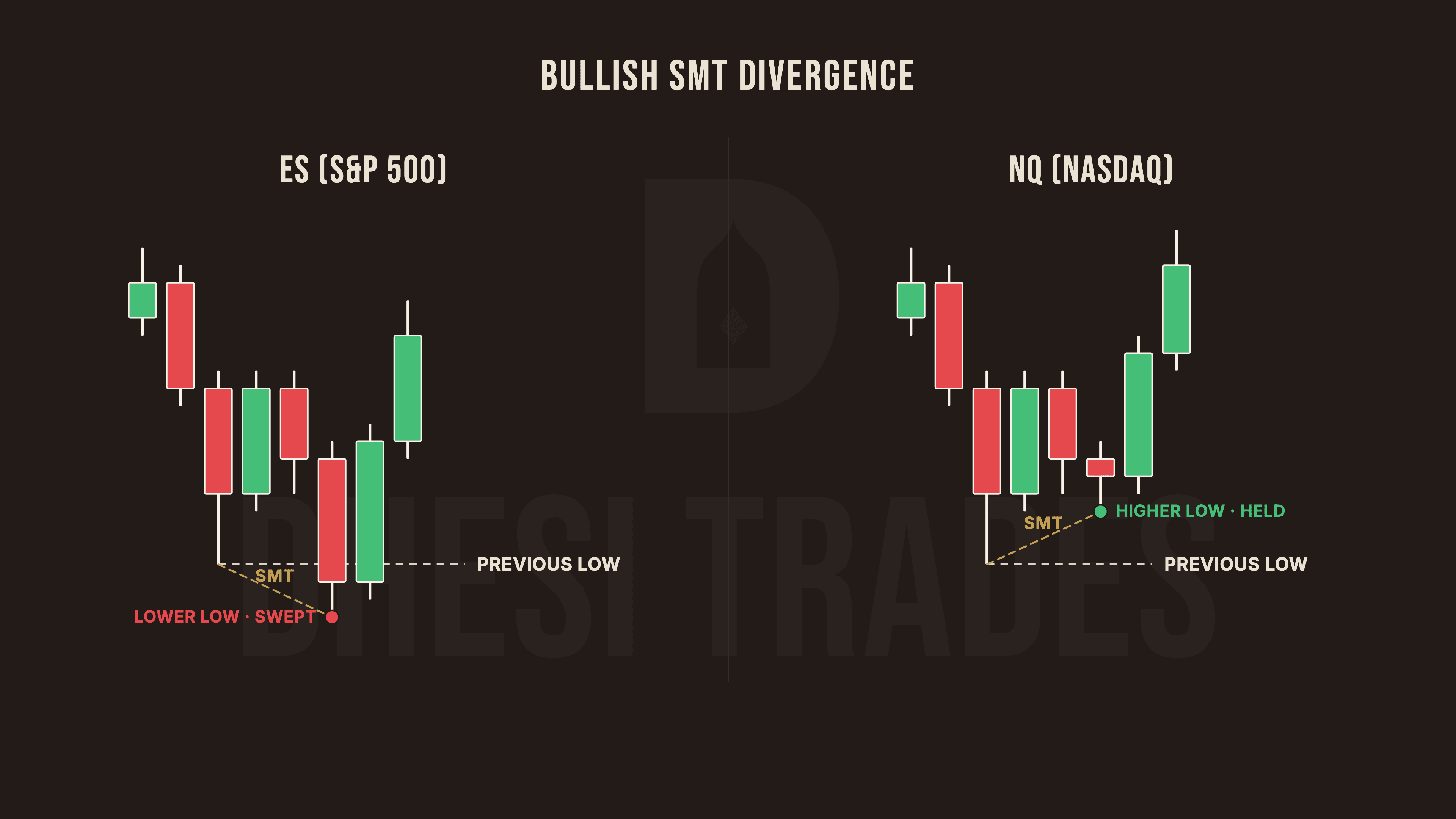
During lunch hour the chart goes quiet. New traders get bored and start swinging. I sit. The PM session is when the real moves develop, and what I want to see is a sweep of the lunch lows on NQ with SMT divergence on ES not putting in the same low.
That divergence, one index sweeps, the other holds, tells me the smart money flow is upward. ES failing to make a new low while NQ takes one is the bullish SMT signature I need.
Why YM Doesn't Matter Here
On non-news days YM does its own thing. It's a bad reference for SMT. Stick to ES vs NQ. They're highly correlated, they share liquidity, and the divergence between them is the cleanest read.
Step 3: The 1-Minute Inversion Trigger
Once SMT confirms, I drop to the 1-minute and wait for the inversion. No displacement, no trade. When the candle finally fires through the bearish FVG and closes above it, that's the entry.
I like to put my stop at the low of the displacement candle. Tight, defined, and if it gets hit, the SMT thesis was wrong and I want out. 2:1 minimum risk-reward, target the session highs.
 Dhesi Trades
Rules I Trade By
- Confirm the 4-hour FVG bias before the open. If you're inside a bullish 4H gap, you do not look for shorts.
- Watch the 1-hour bearish FVG. If it flips inverse, the bullish bias gets a second confirmation.
- Wait through lunch. Mark the lunch high and lunch low. The PM session is where the trade lives.
- Look for a sweep of the lunch low on NQ with SMT on ES not putting in a matching low.
- Drop to 1-minute. Wait for the displacement candle that flips the bearish FVG inverse.
- Enter at the close of the inversion. Stop at the low of the displacement candle.
- Target session highs or relative equal highs. Trim at internal liquidity, hold runners to the external.
- One trade. Maybe two. Then close the laptop.
When NOT To Take It
- The 4H FVG gets violated. Bias is gone. Don't take longs into thin air.
- No SMT divergence. If both ES and NQ make matching lows, smart money isn't differentiating. Wait.
- 1-min displacement is weak. The candle that flips the gap inverse needs energy. A weak close = weak follow-through.
- It's still lunch. 11:30 to 1:00 ET is dead. Setups that print here usually fail.
- You've already hit your two-loss daily stop. The setup repeats. Your discipline doesn't.
The Bottom Line
You don't need a hundred patterns. You need one model and the patience to wait for it. 4H FVG. 1H inversion. 1-minute SMT. When all three line up, the trade prints itself. When they don't, you sit. Most days you sit.
That's the whole game. Same setup. Different day. Run it long enough and the chart does the work for you.
“"I was so confident that we're going to get a move to the upside. We ran all the way into our all-time high. Very clean moves in our PM session."
”Kevin Dhesi